
How to scale up your manufacturing business operations: Strategies, tools, and readiness guide
A lot of businesses have ambitions to expand their operations. Growth is often viewed as one of the ultimate measures of success, particularly for small to mid-sized manufacturers. However, growing too fast without the infrastructure to support can be a fear-inducing prospect, and for good reason.
by Adrian West VP of Retail, Wholesale, Logistics & Manufacturing
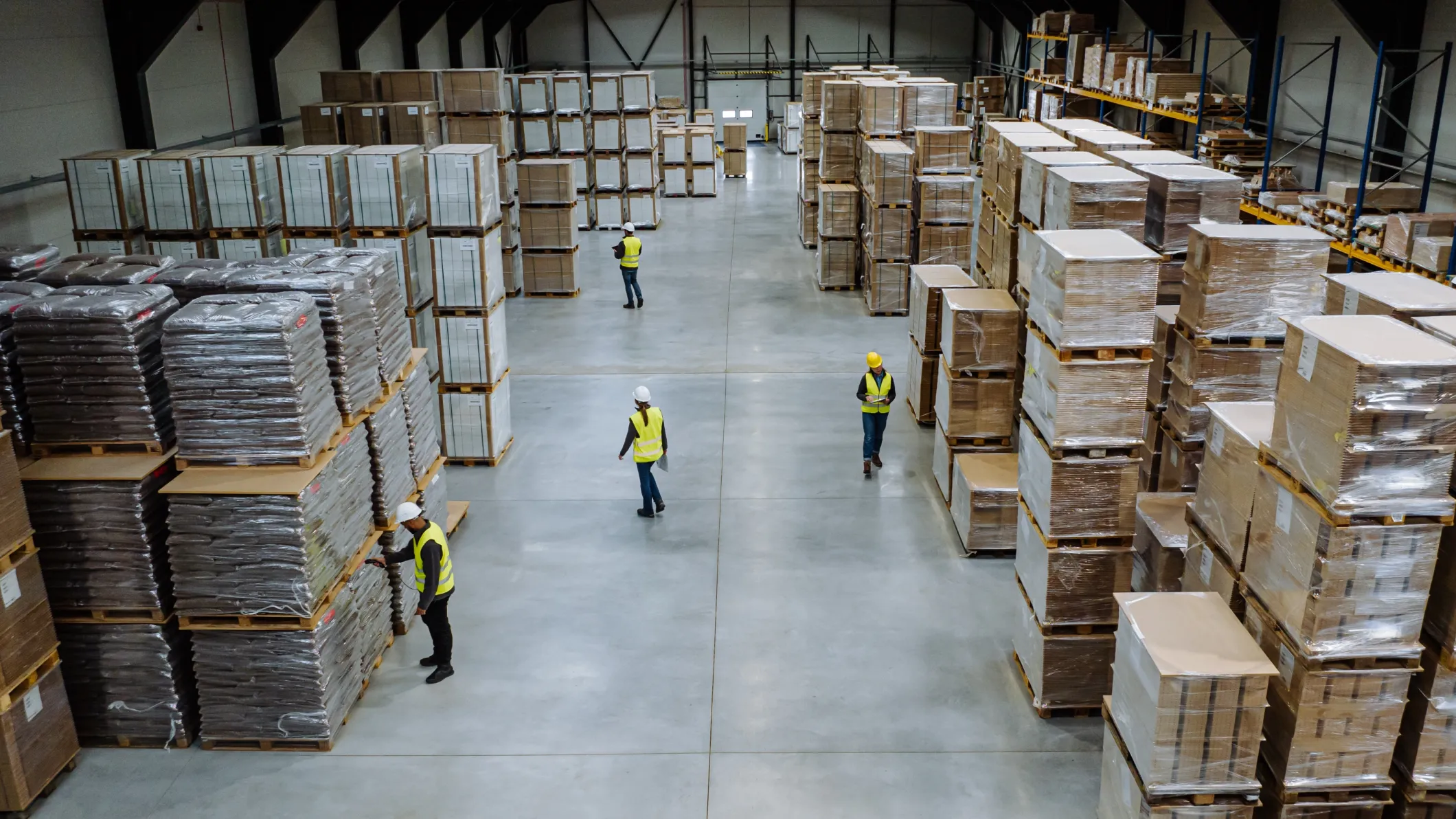
Unmanaged growth has the potential to destabilise your equilibrium, compromise product quality, and push supply chains past their breaking point.
Opportunity is high in the industry but navigating expansion requires a careful, strategic approach.
In this guide, we explore what it truly means to scale up, contrast growth against sustainable scaling, highlight key readiness indicators, and outline practical steps (powered by modern digital technology) to ensure your organisation scales smoothly.
What does it mean to scale up in manufacturing?
In manufacturing, scaling up means systematically increasing your operational capacity and output while maintaining or improving your operational efficiency and margins. Crucially, scaling ensures that all areas of your business (from supply chain and shop floor operations to financial planning and order fulfilment) grow in tandem so that no single department becomes a bottleneck.
Imagine your sales team closes a major contract, or a promotional campaign drives a sudden surge in demand. Simply taking on those orders without adjusting your internal workflows isn't scaling; it’s putting immense pressure on an existing framework.
Scaling up in this scenario involves aligning your material requirements planning (MRP), expanding machine capacity, and optimising inventory management ahead of time. It ensures that while operational scale grows, your business model remains resilient, predictable, and profitable.
Growth vs. scaling: Key differences
While often used interchangeably, growth and scaling represent distinct operational trajectories. Unchecked growth without process adaptation can quickly lead to burnout, delayed deliveries, and eroded profit margins. Here are some of the other notable differences:
|
Focus Area |
Business Growth |
Sustainable Business Scaling |
|
Primary Metric |
Revenue, total sales volume, headcounts, raw output. |
Profit margins, operational efficiency, cost-to-serve, asset utilisation. |
|
Resource Impact |
Inputs (labour, machinery, overheads) increase linearly or faster than output. |
Inputs increase at a lower rate than output through efficiency gains. |
|
Operational Health |
Risks creating bottlenecks, employee burnout, and supply chain strain. |
Maintains quality, customer satisfaction, and staff retention as volume rises. |
|
Role of Tech |
Software used primarily for administrative record-keeping. |
Tech and automation drive processes, providing real-time visibility and end-to-end cohesion. |
Focusing solely on output without optimising your inputs means using the same manual steps to handle twice as many orders. Eventually, the bubble bursts. Sustainable scaling focuses on strengthening inputs so that revenue outpaces operational cost increases.
Is your manufacturing business ready to scale?
Expanding from a position of operational fragility is risky. Before taking proactive steps to increase market share, evaluate these three core indicators:
- Cash flow health: Growth requires upfront capital for materials, labour, and technology. Healthy cash flow provides a buffer against supply chain friction or extended payment terms.
- Supply chain robustness: A fragile supply chain will collapse under higher demand. Ensure key suppliers have the capacity and reliability to scale alongside you.
- Accurate forecasting: Relying on gut feel is unsustainable at scale. You need a reliable method for tracking inventory turn rates, lead times, and customer demand trends.
6-point scale-up readiness checklist
Use this checklist to assess if your operations are ready for expansion:
- Predictable cash flow: You maintain at least 3-6 months of working capital to absorb increased operational costs.
- Stable supply chain: Key suppliers pass performance audits and offer flexible lead times.
- Quality consistency: Rejection rates and scrap rates are consistently low under current production loads.
- Standardised workflows: Standard Operating Procedures (SOPs) are fully documented across shop floor and back-office teams.
- Centralised data: Inventory, sales, and financial records are integrated rather than trapped in disconnected spreadsheets.
- Flexible production capacity: You can adjust shift patterns or machine schedules without causing widespread downtime.
Top challenges manufacturers face when scaling up
Expanding operations in the ANZ manufacturing landscape presents clear operational hurdles:
The skills shortage and labour costs
Finding qualified shop-floor workers and technical staff remains a persistent challenge. According to Australian Manufacturing, skills shortages remain a key bottleneck to growth in the manufacturing sector.
Supply chain fragility and rising input costs
Global supply chain disruptions continue to impact raw material availability. An Inforlogic report highlights that 70% of manufacturers experienced cost increases of up to 20% over a single 12-month period, squeezing margins during growth phases.
Lack of real-time operational visibility
When operating across multiple lines or sites, relying on manual data entry leads to blind spots. Without real-time updates on work-in-progress (WIP), inventory levels, and job costs, decision-makers are forced to react to problems rather than prevent them.
7 strategies for scaling your manufacturing operations
1. Define clear scale-up objectives
Establish target metrics for your expansion. Determine exact targets for throughput rates, inventory turnover, gross margins, and order fulfilment times. Clear KPIs keep management and shop-floor teams aligned.
2. Benchmark against sector standards
Analyse competitors and industry benchmarks. Look at how mid-sized manufacturers in your sub-sector manage capacity, structure shift patterns, and implement digital tools to identify proven paths forward.
3. Invest in up-skilling your workforce
Focus on worker quality and versatility rather than headcount alone. Training staff on modern machinery and software ensures they aren't overwhelmed by higher output requirements.
4. Adapt your business model for demand
Keep your delivery models flexible. You may need to diversify your supplier base, establish new regional hubs, or introduce vendor-managed inventory (VMI) arrangements to maintain delivery performance during demand spikes.
5. Conduct thorough risk assessments
Scrutinise every planned change before rolling it out. Evaluate how increased job runs will impact machine maintenance schedules, floor space, material staging, and working capital needs.
6. Simplify processes before adding complexity
If current operations rely on workaround fixes or manual spreadsheet updates, scaling will only amplify those inefficiencies. Streamline and standardise workflows before increasing batch sizes or adding new product lines.
7. Adopt technology and automation
Technology is the most direct way for growing manufacturers to increase output without driving up overheads. Implementing automated workflows, shop-floor data collection, and connected planning systems provides the foundation needed for sustained operations.
How technology supports manufacturing scale-up
Scaling requires moving beyond standalone spreadsheets and legacy software. Modern manufacturing tech platforms remove manual bottlenecks, enabling companies to grow output while keeping overhead under control. Here are some examples of tech capabilities and the associated benefits:
- Cloud-based agility: Cloud software scales effortlessly with your business. It eliminates the need for expensive on-premise servers and allows teams to access real-time operational data across multiple sites or remote environments.
- Integrated ERP & MRP systems: Unifying your operations under a robust manufacturing ERP for ANZ businesses provides end-to-end visibility. Combining material requirements planning with core finances aligns material purchasing directly with actual customer demand.
- Workflow automation: Automated order processing, stock threshold alerts, and purchase order generation reduce manual administrative tasks, freeing staff to focus on higher-value activities.
- Data-driven forecasting: Real-time dashboards replace guesswork with data, allowing factory managers to forecast material requirements, plan machine maintenance, and monitor job margins in real time.
Industry insight: Research Nester forecasts that the global smart factory market will grow from $155 billion in 2025 to over $547 billion by 2037, driven by manufacturers adopting IoT, automated scheduling, and cloud ERP solutions to secure long-term competitiveness.
How to choose the right manufacturing software for scale-up
Selecting the software to power your growth requires careful evaluation of your current needs and long-term goals.
Key criteria for evaluation
- Modularity: Ensure the software allows you to activate features (such as advanced scheduling, shop floor data capture, or multi-currency support) as your needs evolve.
- Integration: Look for platforms that connect seamlessly across e-commerce, financial accounting, payroll, and CRM systems.
- Australian & New Zealand compliance and support: Choose software tailored to ANZ tax rules, standard accounting frameworks, and local implementation support.
On premise vs. cloud ERP for scale-up businesses
|
Feature |
Legacy On-Premise ERP |
Cloud-Based Manufacturing ERP |
|
Scalability |
High cost; requires server upgrades and manual installations. |
Instant; scale user seats, storage, and modules as needed. |
|
Upfront Capital |
High initial capital outlay for hardware and perpetual licenses. |
Lower initial cost; predictable operational expenditure subscription. |
|
Data Accessibility |
Restricted to on-site networks or complex VPN setups. |
Secure, real-time access from any location or device. |
|
System Maintenance |
Internal IT team must handle updates, backups, and security. |
Vendor manages updates, security, and system maintenance automatically. |
To explore how modern software architectures support growth, read our guide on how to choose an ERP for scalable operations.
How OneAdvanced drives sustainable manufacturing growth
At OneAdvanced, we build software designed to help Australian & New Zealand manufacturers scale efficiently, maintain healthy cash flows, and eliminate operational bottlenecks.
Our unified IQ platform and sector expertise provides the capabilities needed to fulfil day-to-day jobs and manage a growing manufacturing organisation:
- OneAdvanced Manufacturing Software: Comprehensive production planning, job costing and shop floor tracking built specifically for mid-market manufacturers in ANZ.
- Supply Chain Management: Enhances supplier collaboration, purchase order automation, and material tracking across complex supply chains.
- People Management Software: Simplifies shift planning, workforce management, and skills tracking to maximise labour productivity.
By bringing e-commerce, accounting, shop-floor production, and workforce planning into a single tech ecosystem, OneAdvanced provides a reliable single source of truth, allowing you to scale up output while keeping overhead under control.
Ready to scale your manufacturing operations?
Scaling a manufacturing business doesn't have to mean dealing with constant operational fires, ballooning costs, or compromised delivery schedules. By establishing clear readiness metrics, optimising core processes, and deploying connected cloud software, you can build a scalable foundation for long-term profitability.
Take the next step in your scale-up journey. Discover how OneAdvanced Manufacturing software connects end-to-end production with full commercial visibility, streamlining workflows from raw material intake to final delivery, all while supporting sustainable business growth.
FAQs
What does it mean to scale up a manufacturing business?
Scaling up means increasing production output and business revenue without incurring a proportional increase in operational costs. It involves optimising workflows, adopting automation, and ensuring supply chain and back-office processes expand alongside shop floor output.
What is the difference between growth and scaling in manufacturing?
Growth focuses on output metrics like revenue, sales volume, and total units produced, often requiring a linear increase in input resources (costs, staff, equipment). Scaling focuses on efficiency, allowing a business to increase revenue faster than its operational costs by adopting modern technology and streamlined processes.
How does an ERP system help manufacturers scale?
A manufacturing ERP integrates business functions (including inventory control, production scheduling, financials, and purchasing) into a unified platform. It eliminates manual data entry, provides real-time visibility across the organisation, automates reorder points, and enables accurate demand forecasting.
What are the main risks of scaling a manufacturing operation too fast?
Scaling too quickly without standardising processes can lead to severe cash flow shortages, degraded product quality, missed delivery deadlines, supply chain failure, and employee burnout.
Can automation help me scale without expanding headcount?
Yes. Automating routine administrative and production scheduling workflows allows existing teams to manage higher order volumes. This improves overall labour efficiency and reduces operational bottlenecks without requiring immediate staff additions.
About the author
Adrian West
VP of Retail, Wholesale, Logistics & Manufacturing
Adrian has more than 20 years of experience with digital transformation, consultative selling, developing and executing compelling strategies, and passionately leading high-performing teams. He is a proven customer-centric leader, delivering outstanding business outcomes. As the Vice President of Retail, Wholesale, Logistics, and Manufacturing at OneAdvanced, Adrian is tasked with driving growth by helping our customers in these sectors to grasp the full benefits of technology.
Contact our sales and support teams. We're here to help.
Speak to our expert consultants for personalised advice and recommendations or to book a demo.
Call us on
1300 884 831Please enter your details, and our team will contact you shortly.
All fields are required
From simple case logging through to live chat, find the solution you need, faster.
Support centre