
The strategic importance of effective Supply Chain Management in manufacturing
Creating a resilient supply chain is no longer just a tactical requirement; it is the bedrock of a successful manufacturing operation.
by Adrian West VP of Retail, Wholesale, Logistics & Manufacturing
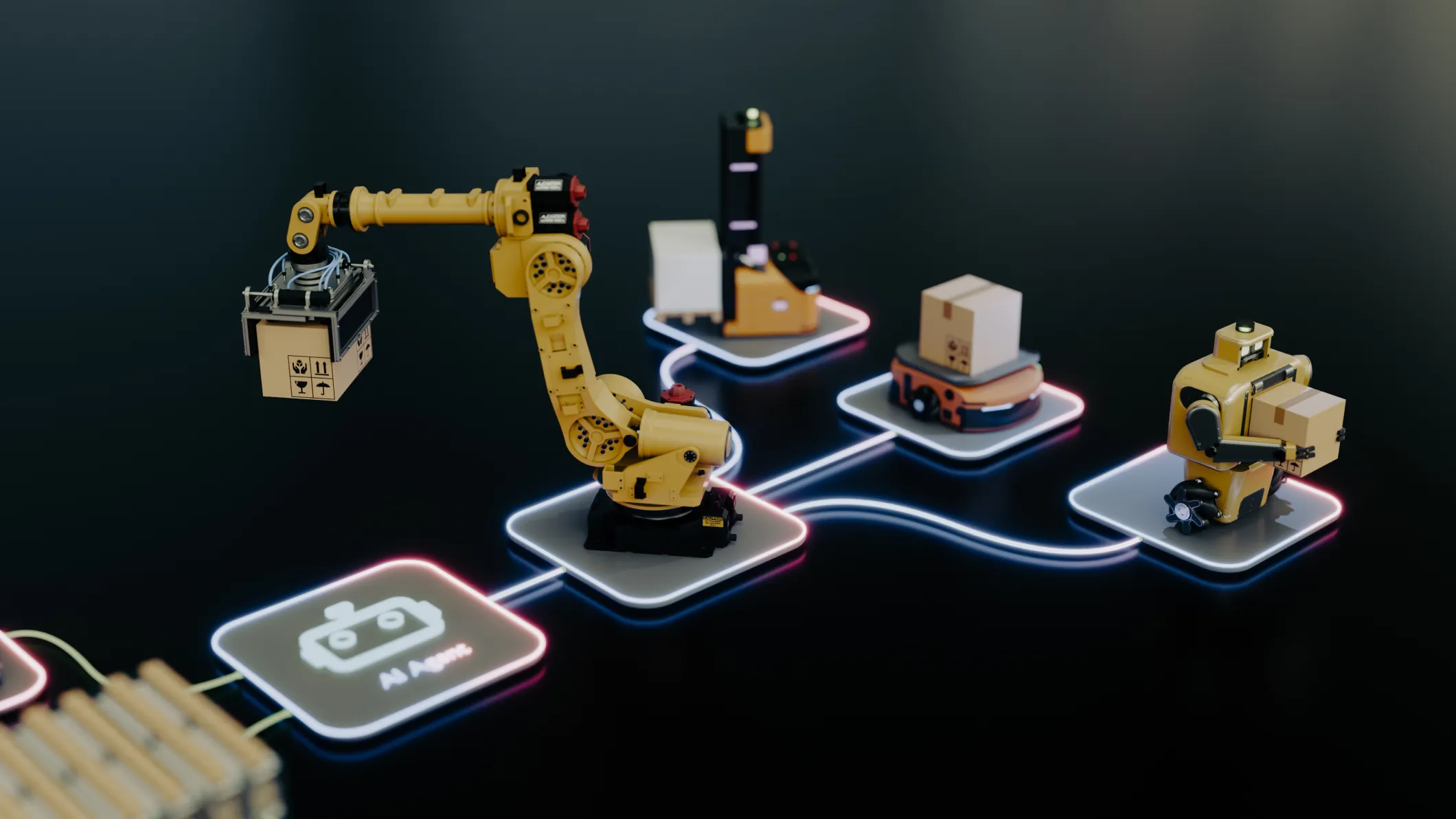
Recent data shows that supply chain management (SCM) in manufacturing has jumped to the dominant strategic priority for 68% of industrial and trade professionals (nearly doubling in urgency over the past year), highlighting that systemic resilience is now a boardroom imperative.
This urgency is driven by two critical pain points: departmental data siloes that blind leaders with regards to internal capacity, and a severe lack of real-time supply chain visibility that leaves teams vulnerable to sudden vendor disruptions.
Without strategic oversight, you lose the certainty of material availability, price stability, and lead-time reliability. While a small business might perhaps cope with ad-hoc procurement processes, a growing organisation today requires a firmed-up, to break down data walls and remain competitive across the wider industry.
Manufacturers face unique pressures (scaling rapidly while navigating upstream volatility) that make modern supply chain risk management a critical priority.
What is supply chain management, and why is it important?
SCM is the strategic orchestration of the relationships and data flows between you and the partners required to fulfil your orders. It is the thread that connects raw materials to the final customer experience.
A fragmented supply chain introduces significant risk: substandard materials, production bottlenecks, and escalating hidden costs. Ultimately, this leads to lost business. The market does not differentiate between you and your suppliers. As far as customers are concerned, you and your supply chain are one and the same. If a supplier fails, your brand carries the reputational weight of that failure too.
What are the benefits of effective supply chain management?
Successful SCM allows you to protect margins, improve operational efficiency, and scale seamlessly with market demand. It provides the confidence that materials will arrive on time, in the correct quantity, and at a predictable price point:
- Operational efficiency: Knowing your components are at your fingertips allows you to focus on internal process optimisation rather than constant firefighting. By breaking down cross-departmental siloes, your production floor can run continuously, eliminating the costly bottlenecks, resource idle time, and unplanned downtime that frequently erode profitability.
- Resource allocation: Eliminating the constant search for alternative materials reduces administrative stress and overhead costs. Instead of losing valuable hours chasing late shipments, your procurement and finance teams can pivot to high-value strategic tasks, allowing you to optimise your inventory levels and free up crucial working capital.
- On-time delivery performance: Good SCM creates a smooth production line, allowing you to commit to customer delivery dates with greater certainty. In a highly competitive market, consistently meeting your lead-time SLAs safeguards your brand reputation, builds long-term customer loyalty, and gives you a distinct advantage over less agile competitors.
How can your supply chain management processes be improved?
1. Communication and data transparency
Your customers demand certainty from you, and you must expect the same from your partners. But a supply chain can only be as accurate as the data it receives. Sharing your production roadmaps and lead-time requirements allows your suppliers to adapt alongside you. As you break into new markets or increase output, your supply chain must be guided by your strategic vision, not just your current purchase orders.
2. Establishing strategic control
Don’t fall into the trap of thinking you are too small to influence your partners. Mid-sized manufacturers are often a supplier's most valuable growth prospect, making proactive supplier relationship management a powerful tool for operational stability.
Establish regular, data-driven communication channels. Suppliers appreciate transparency as it helps them manage their own cash flow and production. A strong SCM process creates a partnership where your suppliers share in your success through increased, predictable order volumes.
3. Managing modern risks
Hoping for the best isn’t an adequate strategy amidst today’s volatility. Supply chain risk management must be handled through due diligence, supplier performance monitoring, and digital traceability. Use industry networks to vet a supplier’s track record. Continually monitor vendor lead times and delivery accuracy to catch potential performance drops before they impact your line.
Monitor for shifts in payment terms or requests for upfront cash, which can signal underlying cashflow issues that could interrupt your production. Loyalty is vital, but so is resilience. Always maintain a "Just-in-Case" roster of alternative suppliers to prevent business interruption.
4. Traceability, compliance, and ethical sourcing
In today's regulatory landscape, your operational perimeter extends well past your factory walls. Achieving true multi-tier supply chain visibility and traceability is no longer optional; it is a critical regulatory and financial safeguard.
When collaborating closely with partners, protecting your proprietary designs is paramount. Implementing robust confidentiality agreements prevents significant legal risks and ensures your trade secrets are safe. Many suppliers simply may not realise the commercial sensitivity of your workflows, making it essential to audit whether they have internal security procedures to prevent departing employees from carrying your intellectual property elsewhere.
Modern procurement requires strict due diligence to manage compliance and ESG risk. Your brand reputation (and your compliance record) will suffer devastating consequences if it emerges that your sub-components are tied to modern slavery, or if a Tier 2 supplier violates stringent environmental and carbon-offsetting mandates.
Today's marketplace views you and your network as a single entity. Utilising data-driven traceability provides an unassailable digital paper trail, ensuring you can verify product origin, guarantee compliance with international trade laws, and defend your brand equity from upstream supplier failures.
5. Predictive demand and inventory analytics
Relying on historic procurement cycles leaves your business vulnerable to rapid market shifts. Improving your processes requires moving toward predictive, data-driven forecasting to achieve robust supply chain visibility. Integrating real-time market signals allows you to anticipate material shortages, tariff fluctuations, or sudden demand spikes before they trigger production bottlenecks.
By applying predictive intelligence to your inventory levels, you can accurately balance your buffer stock. This directly mitigates inventory overstocking and high carrying costs, preventing capital from being tied up in excess warehouse inventory while ensuring you are never caught short during unexpected supplier delays.
The role of manufacturing ERP software in supply chain management
Once foundational relationships and compliance protocols are established, deploying dedicated supply chain management software becomes your most effective lever for driving operational efficiency. Rather than relying on fragmented spreadsheets and manual check-ins, an integrated digital ecosystem provides a single source of truth by unifying data centralisation across your business. This allows you to track end-to-end manufacturing processes (from initial inventory planning and storage to the production floor and final distribution) to unlock scalable business growth.
Modern manufacturing ERP software acts as the central nervous system for operations, allowing historically siloed departments and production functions to seamlessly communicate in real time. Whether your facility utilises Just-In-Time (JIT) methodologies or maintains a strategic buffer of safety stock, migrating to a centralised digital system enables much of the day-to-day workflow to become automated, error-free, and resilient.
To successfully navigate market volatility, an effective supply chain management software solution must deliver four core capabilities:
- Real-time supply chain visibility dashboard: Dynamically track material shipments, transit statuses, and warehouse stock levels in a single visual interface, granting complete supply chain visibility so floor managers can adjust production schedules before an upstream delay causes idle factory time.
- Automated procurement workflows: Eliminate manual data entry and human error via automated purchase order creation. For example, the moment your raw steel sheet stock drops below your customised safety-stock threshold, the system should instantly trigger an automated purchase order to your approved vendor without human intervention.
- End-to-end workflow tracking & safety stock management: Gain total transparency across your production footprint. The software should effortlessly handle both automated lean JIT replenishment schedules for high-turnover items and safety stock buffering for volatile, long-lead components.
- Supplier performance scorecards: Maintain objective, data-driven dashboards within your manufacturing ERP software that track vendor lead times, delivery accuracy, and material quality, giving procurement teams the exact leverage needed for contract renegotiations.
By seamlessly tracking workflows across your entire manufacturing operation, you gain the deep operational visibility and systemic resilience required to withstand the pressures of both today and tomorrow.
FAQs
What is the difference between logistics and supply chain management?
While logistics focuses specifically on the efficient movement, transportation, and storage of goods within a single portion of the network, supply chain management is a broader strategic discipline. SCM encompasses the entire end-to-end ecosystem, including raw material procurement, supplier relationship management, production alignment, supply chain risk management, and the overarching data flows that connect manufacturers to their market.
Why is supply chain traceability critical for manufacturers?
Supply chain traceability provides an audit trail of a product’s entire journey, from raw material origin to final delivery. For manufacturers, this is a critical safeguard against regulatory penalties and reputational damage. It ensures total compliance with evolving carbon-offsetting mandates and ethical labour laws, while simultaneously protecting proprietary intellectual property (IP) across your supplier network.
How does supply chain management software reduce manufacturing costs?
Supply chain management software directly reduces operational overhead by eliminating manual workflows and data siloes. Key cost-saving mechanisms include automated purchase order creation to optimise inventory levels and prevent tied-up working capital, real-time tracking to minimise costly unplanned downtime, and predictive demand forecasting to protect margins against unexpected material inflation.
Should manufacturers use Just-in-Time (JIT) or Just-in-Case (JIC) supply strategies?
The modern manufacturing landscape demands a hybrid approach. While pure Just-in-Time (JIT) minimises warehouse storage and carrying costs, it leaves companies vulnerable to network bottlenecks and overstocking risks when demand spikes drop. Forward-thinking organisations utilise integrated manufacturing ERP software to maintain a lean structure for highly stable materials, while implementing a Just-in-Case (JIC) buffer of critical safety stock for high-risk components to guarantee business continuity.
If you want to optimise your supply chain and transform your business data into a single source of the truth, take a look at OneAdvanced’s Manufacturing ERP Software.
About the author
Adrian West
VP of Retail, Wholesale, Logistics & Manufacturing
Adrian has more than 20 years of experience with digital transformation, consultative selling, developing and executing compelling strategies, and passionately leading high-performing teams. He is a proven customer-centric leader, delivering outstanding business outcomes. As the Vice President of Retail, Wholesale, Logistics, and Manufacturing at OneAdvanced, Adrian is tasked with driving growth by helping our customers in these sectors to grasp the full benefits of technology.
Contact our sales and support teams. We're here to help.
Speak to our expert consultants for personalised advice and recommendations or to book a demo.
Call us on
0330 343 4000Please enter your details, and our team will contact you shortly.
All fields are required
From simple case logging through to live chat, find the solution you need, faster.
Support centre