
2026
Government Trends Report
Now in its tenth consecutive year, the OneAdvanced Trends Report continues to be a trusted benchmark for organisations, offering clear, actionable insights into today’s fast shifting business and technology landscape.
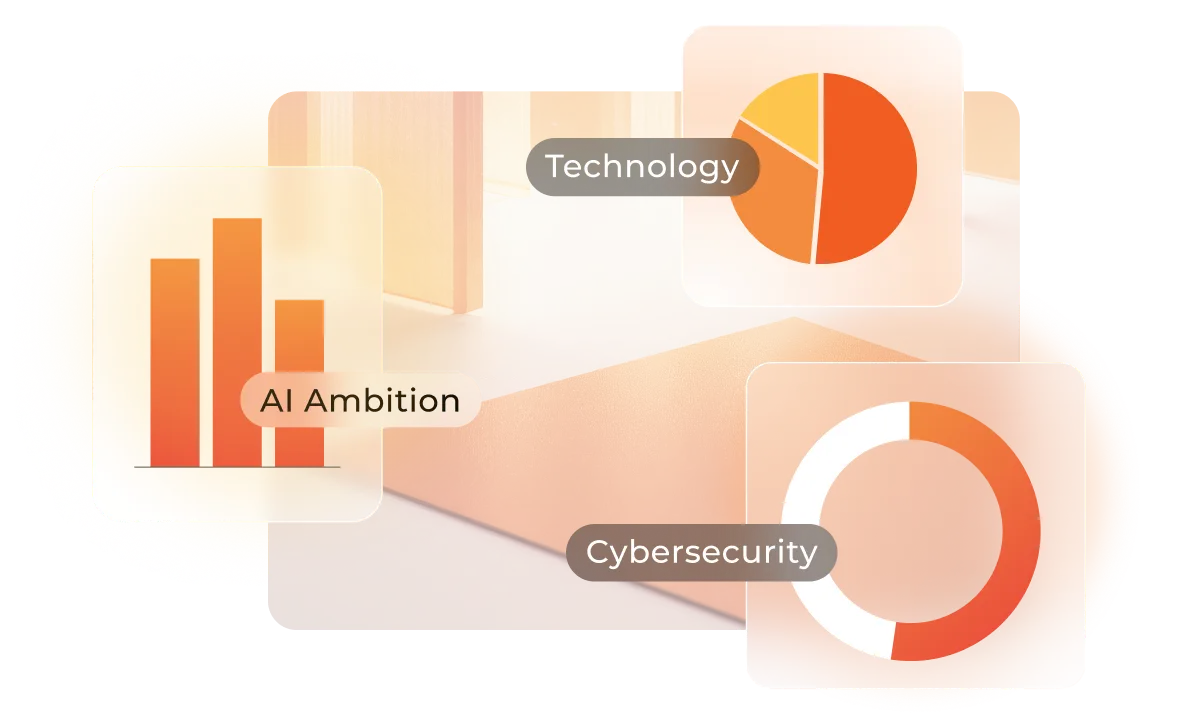
The report empowers Government professionals, providing a clear roadmap for technology adoption and strategic growth.
What's inside
- Insights into the biggest challenges facing the UK Government sector, and how they’re shaping productivity.
- A clear look at the barriers holding Government professionals back from hitting their goals.
- Practical strategies you can use to drive growth and unlock performance.
Why download this report?
This year’s report captures the experiences and perspectives of more than 4,500 senior decision makers from UK organisations with over 100 employees, spanning nine industry sectors. Drawing on a decade of data, it provides clear guidance to support future technology adoption, boost productivity, and drive strategic growth.
Key statistics
69%
face a platform integration crisis
1
AI adoption is the priority for 2026
79%
plan to invest more into Cybersecurity
Government Trends Report 2026
AI at the core: Forces redefining the future
As we move into 2026, the government sector is navigating a landscape where AI has become central to political, social, and economic systems. Global forces, ranging from geopolitical tensions and climate challenges to regulatory shifts and cultural changes, are redefining trust and driving rapid transformation. While AI fuels innovation and enhances public services, it also introduces new risks, requiring stronger accountability. This report highlights the key macro forces that will shape decisions, challenges, and opportunities for government leaders in the years ahead.
A decade of insight shaping the future of business
Explore the 2026 Business Services Trends Report
Discover the key trends influencing business services professionals today. Our 10th Annual Trends report reveals how leaders are navigating technology shifts, workforce challenges, and opportunities f