
Best ERP for manufacturing industry in the UK
The right manufacturing ERP doesn’t just track your inventory; it bridges the gap between the factory floor and the boardroom, turning volatile supply chain data into a roadmap for sustainable growth.
by Adrian WestPublished on 27 February 2026 6 minute read
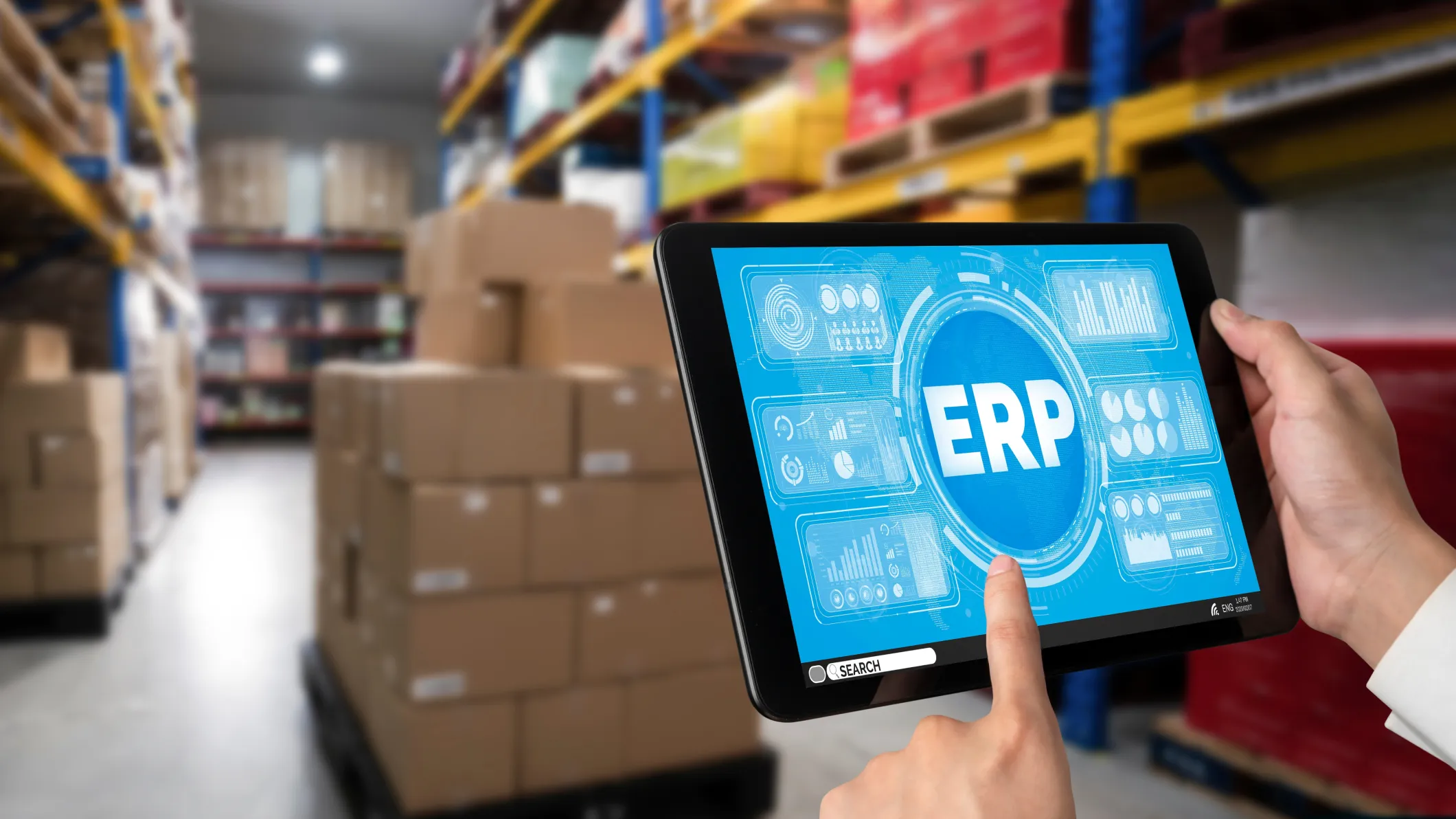
Check out OneAdvanced’s composable ERP capabilities →
Managing production delays and operational bottlenecks can feel like a constant uphill battle when your data is trapped in disconnected systems. Modern ERP platforms solve this by centralising your operations, ensuring that every shift, material order, and financial report is perfectly aligned to drive maximum productivity.
Here are the top ERP software solutions for manufacturing businesses today:
1. OneAdvanced’s composable ERP platform
OneAdvanced offers a modular, API-driven approach designed to dismantle the rigidity of traditional, monolithic systems. By focusing on a "best-of-breed" strategy, it allows UK manufacturers to integrate specialised portfolios for Finance, People Management, and Operations without the disruption of a total system overhaul.
- Key features: Composable architecture for phased implementation, embedded AI for predictive insights, and deep UK-specific compliance. Includes specialised modules for Time and Attendance, Financials, and Talent Management.
- Suitability to the manufacturing industry: Ideal for mid-sized manufacturers looking for enterprise-grade power without the typical associated complexity and cost. Its focus on British innovation and data sovereignty makes it a standout choice for UK-based firms.
2. Microsoft Dynamics 365
A widely recognised suite that leverages the familiar Microsoft ecosystem. It offers a broad range of applications from CRM to Supply Chain Management, aimed at providing a 360-degree view of the business.
- Key features: Native integration with Office 365, AI-driven demand forecasting, and mixed reality tools for shop floor training.
- Suitability to the manufacturing industry: Strong for businesses already heavily invested in Microsoft. However, the complexity of licensing and the steep learning curve for its more advanced manufacturing modules can be a barrier for smaller teams.
3. SAP S/4HANA Cloud
SAP is a global heavyweight in the ERP space, known for its robust "MRP Live" functionality and in-memory database that allows for massive data processing in real-time.
- Key features: Real-time analytics, Demand-Driven MRP (DDMRP), and advanced predictive maintenance for shop floor machinery.
- Suitability to the manufacturing industry: Best suited for large, multinational corporations with highly complex, high-volume production requirements. The implementation process is notoriously intensive and costly.
4. Sage X3
Sage X3 targets mid-to-large-sized manufacturers, offering specific tools for both discrete and process manufacturing (like chemicals or food and beverage).
- Key features: Robust quality control tracking, multi-level Bill of Materials (BOM) management, and integrated financial reporting.
- Suitability to the manufacturing industry: A solid contender for firms needing deep traceability. Users often note that while it is highly customisable, those customisations can make the system difficult to update over time.
5. Syspro
Syspro is one of the few long-standing ERP vendors that focuses exclusively on manufacturing and distribution, rather than trying to serve every sector.
- Key features: Inventory optimisation, "What-If" capacity planning, and a user-friendly interface with drag-and-drop data functionality.
- Suitability to the manufacturing industry: Great for specialised manufacturers who want a system built for their floor. However, it lacks some of the broader, integrated HR and talent management depth found in more modern, modular platforms.
6. Oracle Fusion Cloud ERP
Oracle’s cloud offering is an extensive, integrated suite that emphasises advanced automation and machine learning across all back-office functions.
- Key features: Intelligent voice interface, quarterly update cycles, and a highly secure, multi-layered data protection architecture.
- Suitability to the manufacturing industry: Strong for global organisations needing to consolidate international subsidiaries. The sheer scale of the system can feel overwhelming for mid-market UK manufacturers.
7. NetSuite
Owned by Oracle, NetSuite is a purely cloud-native solution that has grown from an accounting tool into a comprehensive business suite.
- Key features: Real-time visibility into the entire production cycle, multi-location inventory management, and automated financial consolidation.
- Suitability to the manufacturing industry: Good for rapidly scaling businesses. However, users frequently point out that many essential manufacturing features require additional paid modules, leading to "module creep" in costs.
8. Infor Cloud
Infor differentiates itself by offering industry-specific "CloudSuites" that are pre-configured with the nuances of certain sectors, such as automotive or aerospace.
- Key features: Advanced global supply chain management, sophisticated analytics, and high-fidelity production scheduling.
- Suitability to the manufacturing industry: Excellent for large-scale manufacturers with complex, global supply chains. The downside is the complexity of implementation, which often requires a dedicated, specialised IT department.
9. Epicor
Epicor Kinetic is designed specifically for manufacturers and is known for its strong shop-floor controls and "version-controlled" inventory management.
- Key features: Real-time production monitoring, automated procurement, and a modular design that supports both cloud and on-premise deployment.
- Suitability to the manufacturing industry: A reliable choice for job shops and discrete manufacturers. Some users have reported that customer support responsiveness can vary during complex system upgrades.
10. Odoo Manufacturing
Odoo is an open-source ERP that uses a unique app-based structure, allowing users to install only the specific tools they need.
- Key features: Integrated PLM (Product Lifecycle Management), maintenance scheduling, and a user-friendly quality alert system.
- Suitability to the manufacturing industry: Popular with smaller manufacturers due to its low entry cost. However, as business needs grow, the cost of supporting and integrating third-party apps can rise significantly.
11. Acumatica
Acumatica is a modern, browser-based ERP that offers a "Manufacturing Edition" with a focus on ease of use and rapid integration.
- Key features: Visual production scheduling, native field service integration, and a unique pricing model based on resources used rather than per-user seats.
- Suitability to the manufacturing industry: A flexible choice for mid-market businesses. While innovative, its presence and specialised support in the UK market are still growing compared to domestic providers.
How to choose the right ERP system
Selecting a system is a strategic decision that affects every layer of your organisation.
Key considerations for your manufacturing business
- Company size & scale: Ensure the software can handle your current volume but has the modularity to grow without requiring a full replacement.
- Deployment & cloud needs: Determine if you need a pure cloud solution for accessibility or a hybrid model to maintain certain on-site controls.
- Manufacturing production method: Does the ERP support your specific style (e.g., Make-to-Stock, Engineer-to-Order, or Batch-Driven)?
- Compliance & support requirements: In the UK, data sovereignty and local know-how are critical. Look for a partner who understands UK-specific legislations.
Functionality to prioritise
- Inventory and warehouse management: Real-time stock visibility and multi-location tracking.
- Resourcing and scheduling: Managing both machine and human capacity, essentially putting the right things and people in the right place at the right time.
- Production planning: Align material arrivals with production runs.
- Time & Attendance monitoring and payroll: Streamlining shift management and correct/compliant pay.
- Manufacturing costing and financial integration: Accurate tracking of Work-in-Progress (WIP) and margins, plus wider integration of overall financial performance.
- Employee performance monitoring and continuous learning: Bridging the skills gap through an integrated LMS.
- Reporting and analytics: Turning raw data into actionable C-suite insights.
- Supply chain and procurement management: Mitigating risks of input cost volatility and gaining full visibility of suppliers.
- Governance and risk management: Secure record-keeping, audit-readiness, and proactive risk mitigation.
- Integration of workflows: Breaking down silos between the likes of HR, Finance, and Operations.
- AI capabilities: Leveraging machine learning for predictive maintenance, forecasting, and automation.
Benefits of using a composable ERP in manufacturing
Switching to a composable platform allows manufacturers to move away from rigid, "all-or-nothing" software. This modern approach delivers deep strategic value:
Better production control and agility
Adjust schedules in real-time based on actual resource availability and machine uptime. By dismantling operational silos, you can respond to "rush" orders or supply chain hiccups without crashing the entire production plan.
Accurate inventory and lower costs
By integrating procurement directly with production, you can reduce maverick spend and eliminate excess safety stock. The ability to track Work-in-Progress (WIP) and margins in real-time ensures you aren't losing money on hidden forms of wastage or input cost volatility.
Improved planning and forecasting with AI
Use embedded AI to anticipate changes in demand and inventory shortages. This foresight allows you to secure materials plan staff shifts more effectively.
End-to-end visibility and data integrity
A single source of truth from the initial quote to final delivery. This visibility is vital for meeting increasing quality demands and environmental regulations, as it provides a transparent audit trail for every component and process.
Lower operational risk and faster ROI
Phased implementations mean you don't have to risk your entire operation on a single "go-live" date. You can modernise your most critical functions first, delivering immediate efficiency gains while you prepare for the next stage of your digital transformation.
Bottomline
While giants like SAP and Oracle offer massive scale, OneAdvanced’s platform provides the best ERP capabilities for mid-sized manufacturers in the UK, because it combines enterprise-grade power with a partnership-led philosophy. By offering composable, AI-infused portfolios that address the specific "jobs to be done" in Finance, HR, and Operations, we level the playing field for the mid-market.
Ready to modernise your operation? Explore our composable ERP system for manufacturing →
FAQs
What is composable ERP software?
A composable ERP is a modular approach to the technology which shifts away from a fixed, monolithic system toward a collection of interchangeable applications. Unlike traditional ERPs that are rigid and hard to update, a composable system allows businesses to implement, update, or replace specific modules independently, ensuring the business remains agile, innovative, and cost-effective.
What production methodologies does ERP support?
Modern ERP systems are designed to support a wide range of methodologies, including Make to Stock (MTS), Make to Order (MTO), and Engineer to Order (ETO). Advanced platforms can also handle Job Shop, Batch-Driven, and Project-Centric manufacturing, allowing organisations to manage complex bill of materials (BOM) and routing regardless of their production style.
What’s the difference between MRP and ERP?
MRP (Material Requirements Planning) focuses strictly on inventory and production schedules, whereas ERP (Enterprise Resource Planning) integrates all core business functions. While MRP is a component of manufacturing software, a full ERP suite connects that production data with Finance, HR, and Supply Chain management for a unified view of the organisation.
About the author
Adrian West
VP of Retail, Wholesale, Logistics & Manufacturing
Adrian has more than 20 years of experience with digital transformation, consultative selling, developing and executing compelling strategies, and passionately leading high-performing teams. He is a proven customer-centric leader, delivering outstanding business outcomes. As the Vice President of Retail, Wholesale, Logistics, and Manufacturing at OneAdvanced, Adrian is tasked with driving growth by helping our customers in these sectors to grasp the full benefits of technology.
Contact our sales and support teams. We're here to help.
Speak to our expert consultants for personalised advice and recommendations or to book a demo.
Call us on
0330 343 4000Please enter your details, and our team will contact you shortly.
All fields are required
From simple case logging through to live chat, find the solution you need, faster.
Support centre